
Transformation doesn’t fail on strategy, it fails on people
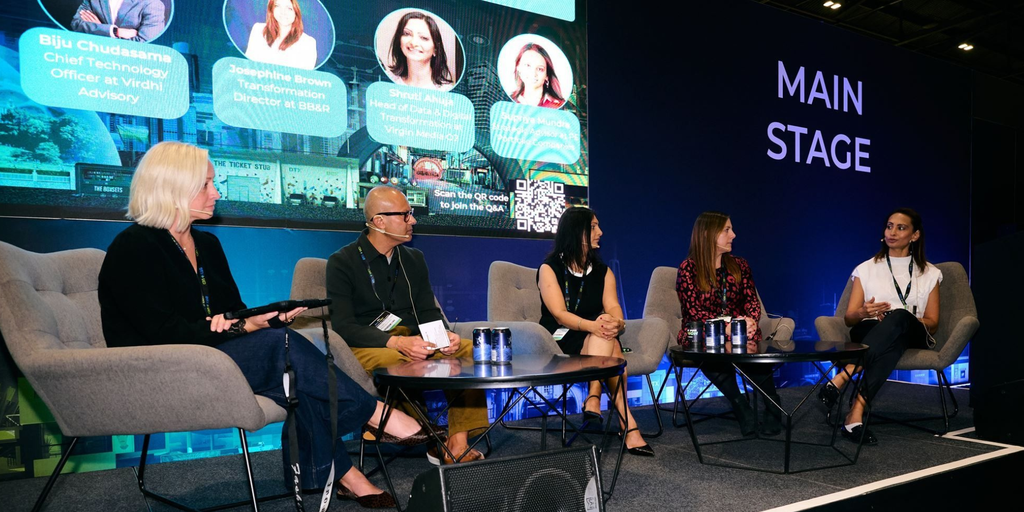
Last month I had the pleasure of moderating a brilliant panel discussion at Digital Transformation EXPO (DTX) London on a question that resonates with so many transformation leaders: why transformation fails. The answer, more often than not, isn’t strategy: it’s people.
Thank you to Supriya Mundra, Shruti Ahuja, Josephine Brown, and Biju Chudasama for such an honest and thought-provoking conversation. It was one of those sessions where the room kept nodding along, because almost everyone there had lived some version of what was being described.
It’s a pattern we see at Definia on programmes of every size. The strategy is usually sound and the plan is usually detailed. What tends to get left behind is the people who have to make it work. So, I wanted to share a few reflections from the panel, along with some of my own.
Why transformation fails: The false economy of speed
What struck me most was how often organisations underestimate the importance of bringing people with them through change. In the pursuit of speed, it’s tempting to focus on plans, milestones and delivery. They’re tangible, they fit neatly into a status report and they give everyone a reassuring sense of progress.
But as the panel discussed, moving quickly without creating understanding, trust and ownership is often a false economy. You may gain speed at the start, only to face bigger challenges further down the road. Think workarounds, quiet disengagement and new systems that go live but never really land. The time saved early on gets spent several times over trying to recover momentum later.
That isn’t an argument for going slowly. It’s an argument for being deliberate about where the time goes.
Five themes that stayed with me
1. People need a real voice in shaping change
After all, people are far more likely to support what they’ve helped create. Consultation that happens after the decisions have been made isn’t really consultation, and people can tell. Involving those closest to the work early, while there’s still room to shape the answer, builds ownership. It usually produces a better answer too.
2. Adoption is the real measure of success
Delivery is just the beginning. A programme can hit every milestone and still fall short if people don’t use what’s been built, or use it in ways that quietly undo the benefits. If go-live is the finish line, we’re measuring the wrong thing.
3. Resistance isn’t something to avoid
Often, it’s where you learn the most about what matters to your people and where the real pain points lie. Resistance is usually treated as a problem to be managed. I’d rather treat it as information. When someone pushes back, they’re often telling you something the plan hasn’t accounted for yet.
4. Leadership matters most when things get difficult
The best leaders stay engaged, keep listening and are willing to adapt when the reality on the ground doesn’t match the status reports. It’s easy to be visible at launch. It’s harder, and far more valuable, to stay close when the programme hits turbulence and the green statuses start to feel a little optimistic.
5. Capability building isn’t a side activity
It is the transformation. Sustainable change happens when people have the confidence, skills and support to succeed long after the programme ends. This is something we care about deeply at Definia. The aim is never a single big shift followed by a handover. It’s leaving people able to keep improving once the programme team has stepped back.
A simple test for any transformation
One comment that summarised it brilliantly for me was a simple test for any transformation:
Are we making work easier, decisions better and business performance stronger?
For all the methodologies, dashboards and governance structures we put in place, perhaps that’s the question we should keep coming back to. I like it because it’s very hard to hide from. A programme can be on time, on budget and well governed and still fail it. And when the answer is yes, most of the other measures tend to follow.
It’s a question that belongs at every stage, from defining the problem and designing the solution through to delivery and driving adoption once the new ways of working are in place. Asked early, it shapes better decisions. Asked late, it tells you whether the change has stuck.
Strategy starts it, people decide it
Thanks again to the panel and to everyone who joined us at DTX London. It was a great reminder that while transformation may start with strategy, its success is ultimately determined by people.
If you’re leading a programme right now, a few questions are worth sitting with. Who has helped shape it? How will you know it’s been adopted? What will your people be able to do once the programme team has moved on? If any of those answers feel uncertain, that’s probably where the real work is. Get in touch – I’d love to hear how others are approaching it.